The Role of Technology in Creating Minimalist and Efficient Work Environments
Rethinking the American Workspace
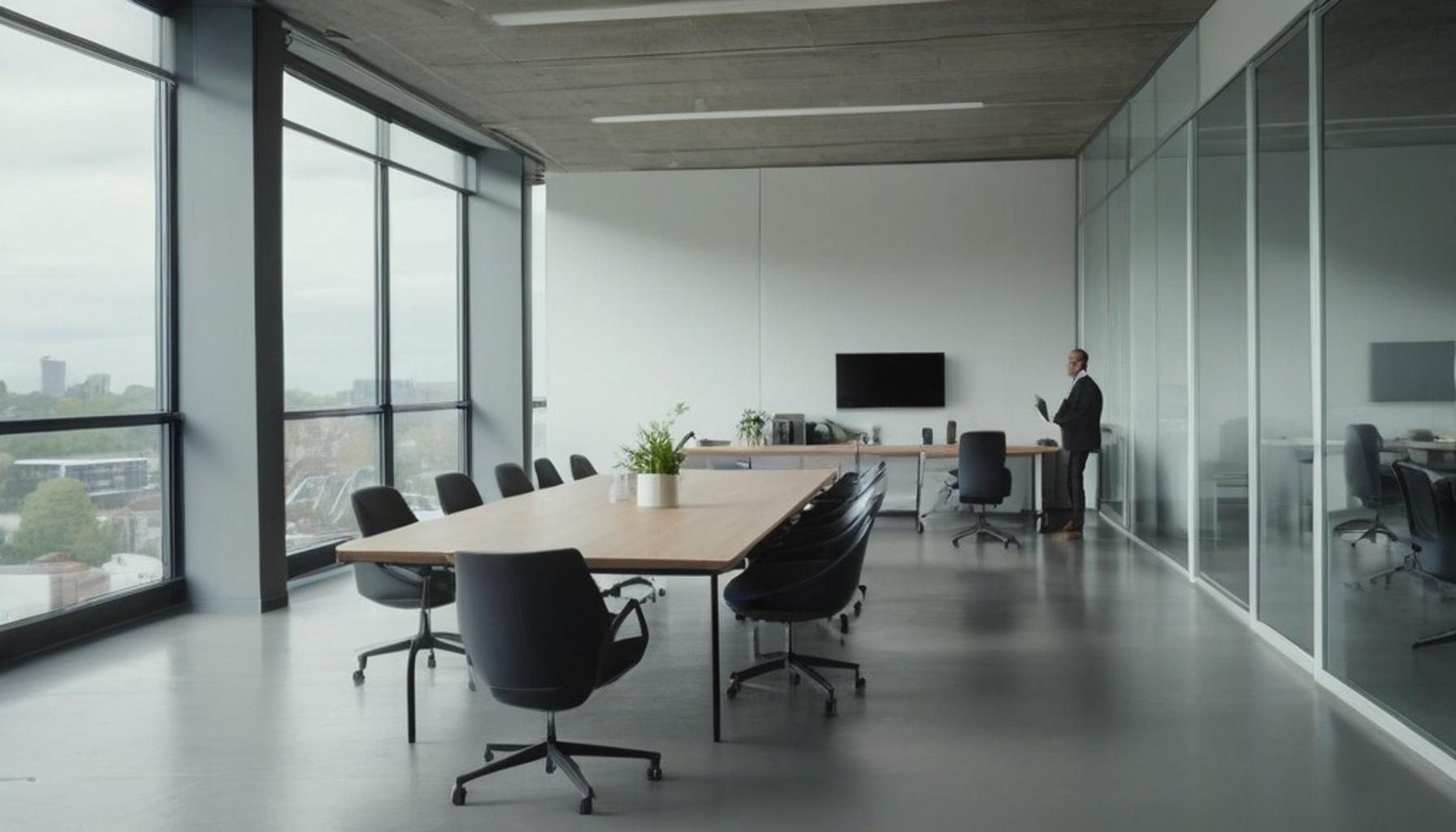
Across the United States, offices are shedding clutter and embracing simplicity. From Seattle tech startups to New York corporate suites, businesses are discovering that less truly can mean more. This shift is not merely an aesthetic preference; it reflects a significant evolution in workplace dynamics, driven by profound changes in how we work and collaborate.
At the heart of this transformation is technology in minimalist work environments, a movement reshaping how Americans think about productivity and design.
Why This Shift Matters Now
With the rise of remote and hybrid work policies, many companies are reevaluating their office layouts. Increasingly, studies indicate that cluttered workspaces can reduce focus by up to 20 percent. This discovery makes a streamlined design more than just an aesthetic choice; it is now viewed as a critical factor in enhancing productivity and employee satisfaction.
Smart integration is replacing outdated setups with innovative designs that prioritize efficiency. Consider what’s driving this change:
- Efficient workspace technology is revolutionizing traditional concepts by eliminating unnecessary hardware and cables, leading to cleaner lines and a more serene environment.
- Smart office solutions are emerging—features like voice-activated lighting and climate control allow users to modify their surroundings quickly, enhancing comfort and reducing energy consumption.
- Productivity tools for workspace management, such as cloud storage platforms and AI scheduling assistants, facilitate seamless collaboration and help keep teams aligned with minimal friction.
- Moreover, wired charging stations are being replaced with wireless options, which serve to eliminate the chaos of tangled cords and contribute to a sleek aesthetic.
A Growing National Trend
Companies like Google and Salesforce have already invested heavily in minimalist office design technology. Their experiences showcase that adopting these principles leads not only to fewer distractions but also to measurable increases in employee satisfaction and overall morale. In some cases, firms reported a 30 percent boost in productivity following the implementation of smart workspace strategies.
As a result, this article explores how creating efficient work environments through smart technology is no longer optional. For American businesses aiming to compete in 2024 and beyond, embracing these minimalist strategies has become essential. By fostering a design ethos rooted in simplicity and functionality, companies can improve employee well-being while driving performance to new heights.
CHECK OUT: The Role of Digital Tools in Creating Efficient Minimalist Systems
# The Digital Tools Powering the Minimalist Movement
The Hardware Behind the Simplicity
Walk into any forward-thinking office in Austin or Boston today, and you’ll notice something missing: the tangle of wires, stacks of paper, and bulky machinery that once defined corporate America. This transformation didn’t happen by accident. Technology in minimalist work environments relies on a specific set of tools designed to disappear into the background while performing more functions than ever before.
Multi-function devices are leading this charge. A single piece of equipment now handles printing, scanning, and secure document storage, replacing what used to require three or four separate machines. This consolidation alone can free up significant square footage in office layouts.
Cloud Computing as the Foundation
Perhaps no innovation has done more for efficient workspace technology than cloud computing. Physical filing cabinets, once the backbone of every American office, are becoming relics.
According to recent industry data, companies migrating to cloud-based systems report storage cost reductions of nearly 40 percent, alongside dramatic improvements in document retrieval speed. Employees no longer waste time searching through folders or waiting for IT support to locate archived files.
This shift supports several practical benefits that American businesses are actively pursuing:
- Reduced physical storage needs, allowing companies to downsize office space or repurpose it for collaborative areas.
- Instant access to files from any location, which strengthens hybrid work arrangements common in cities like Chicago and San Francisco.
- Automatic backup systems that eliminate the anxiety of lost data, a frequent concern in traditional paper-based offices.
- Enhanced security protocols that often surpass what small and mid-sized businesses could previously afford with in-house servers.
Smart Office Solutions in Action
Beyond storage, smart office solutions are redefining daily operations. Sensor-based lighting adjusts automatically based on occupancy, cutting energy waste without requiring employee intervention. Companies in Denver and Portland have reported utility savings exceeding 25 percent after installing these systems.
Meanwhile, integrated software platforms now combine scheduling, communication, and project tracking into single interfaces. This consolidation reflects a broader trend: minimalist office design technology isn’t just about fewer physical objects. It’s about fewer digital distractions too.
Businesses adopting these productivity tools for workspace management are finding that simplicity, when engineered correctly, creates room for deeper focus and more meaningful work.
| Key Aspects | Description |
|---|---|
| Efficient Workspace Technology | Integrating technology in minimalist work environments streamlines tasks and reduces clutter, enhancing productivity. |
| Smart Office Solutions | Utilizing smart devices for resource management creates adaptability and sustainability in office design. |
| Productivity Tools for Workspace | Tools designed for efficiency, such as digital collaboration platforms, empower teams while minimizing physical products. |
| Minimalist Office Design Technology | Leveraging cloud services and online resources allows for a decluttered work environment with access to essential tools. |
RECOMMENDED: How Efficient Systems Theory Can Transform Your Daily Routine in a Minimalist Way
Automation and the Rise of Invisible Efficiency
If the first wave of workplace transformation centered on decluttering physical space, the second wave is quieter and arguably more consequential. It’s happening inside the software layer, where automation now handles tasks that once consumed hours of human attention. This is where technology in minimalist work environments reveals its true depth.
Consider the average administrative workflow in a mid-sized firm in Atlanta or Minneapolis. Invoice processing, meeting scheduling, and routine email sorting used to require dedicated staff hours. Today, artificial intelligence handles these functions with minimal oversight, and industry reports suggest businesses save an average of 12 hours per employee, per month after implementing automated workflows.
Artificial Intelligence as a Workspace Architect
AI-driven platforms are increasingly acting as digital architects of the modern office. They analyze usage patterns and recommend adjustments that human managers might overlook entirely.
Some practical applications already reshaping American offices include:
- Predictive scheduling tools that assign desks and meeting rooms based on actual usage data, reducing wasted space in hybrid offices.
- Automated inventory systems that reorder office supplies only when needed, eliminating overstocked storage closets.
- Chat-based virtual assistants that filter and prioritize communications, reducing the mental clutter of overflowing inboxes.
- Data-driven layout recommendations that help companies in Seattle and Miami redesign floor plans around how employees actually move and work.
This is efficient workspace technology operating at its most sophisticated level: not simply removing objects, but removing unnecessary decisions.
The Quiet Influence of Wearable and Sensor Tech
Another layer worth examining involves wearable devices and environmental sensors, tools not always associated with minimalism but increasingly central to it. Badge-based sensors track occupancy in real time, feeding data into building management systems that adjust heating, cooling, and lighting without any manual input.
Companies experimenting with these smart office solutions report not just cost savings but measurable improvements in employee comfort scores. One survey of office workers in Charlotte found that 68 percent noticed improved air quality and lighting consistency after sensor-based systems were installed.
These tools rarely draw attention to themselves, which is precisely the point. The best productivity tools for workspace optimization tend to operate silently in the background, adjusting conditions before employees even register discomfort.
For organizations serious about creating efficient work environments, this shift toward invisible automation represents the next frontier, one where the absence of friction becomes the clearest sign of technological success.
LEARN MORE: Integrating Efficient Systems into a Minimalist Routine: How to Automate Daily Tasks to Boost Productivity
Where Minimalism and Technology Converge Next
Across offices in Atlanta, Seattle, Charlotte, and beyond, a pattern emerges: technology in minimalist work environments is no longer a design trend but a operational strategy. What began as decluttered desks and open floor plans has evolved into something far more layered, systems that think, adjust, and anticipate on behalf of the people who use them.
The throughline connecting every example in this discussion, from AI-driven scheduling to sensor-based lighting, is subtraction through intelligence. Clutter disappears not because someone removes it manually, but because efficient workspace technology prevents it from accumulating in the first place.
Rethinking What “Efficient” Really Means
It’s worth pausing on a distinction many overlook: efficiency isn’t just speed, it’s the elimination of friction. The companies seeing the strongest results aren’t necessarily buying more gadgets. They’re buying fewer, smarter tools that integrate seamlessly into daily routines.
This is the quiet lesson behind minimalist office design technology: restraint, applied thoughtfully, often outperforms abundance.
A few takeaways stand out for organizations considering their next move:
- Prioritize systems that reduce decisions, not just objects.
- Measure success through comfort and time savings, not just cost cuts.
- Treat smart office solutions as long-term infrastructure, not short-term upgrades.
As more American businesses adopt productivity tools for workspace optimization, the competitive edge will likely belong to those who understand that true minimalism isn’t about having less technology, it’s about having technology that works invisibly, intelligently, and continuously.
For any organization creating efficient work environments, the path forward seems clear: the future office won’t be defined by what’s visible on the desk, but by the invisible systems working quietly to keep everything else out of the way.
Frequently Asked Questions
How can technology in minimalist work environments reduce distractions?
Technology can help create minimalist work environments by offering tools that minimize clutter and distractions. With digital tools like project management software and communication apps, teams can streamline processes and keep everything organized in one place. This reduces the need for physical papers and items, allowing for a cleaner, more focused workspace.
What types of technology are essential for promoting efficiency in minimalist workspaces?
Essential technologies for minimalist workspaces include cloud storage solutions, task automation software, and collaboration tools. These resources not only save physical space but also enhance productivity by allowing easy access to files and real-time communication among team members. By relying on digital solutions, teams can maintain a tidy environment while staying efficient.
Can integrating smart devices enhance a minimalist work environment?
Absolutely, integrating smart devices such as smart thermostats, lighting, and even voice-activated assistants can significantly enhance a minimalist work environment. These technologies help create a more efficient space by automating routine tasks and optimizing energy use, allowing workers to focus on their core responsibilities without added distractions.
How does remote work technology contribute to a minimalist office setup?
Remote work technology fosters a minimalist office setup by enabling employees to work from anywhere, reducing the need for large office spaces filled with equipment. With tools like video conferencing, online collaboration platforms, and digital file sharing, teams can operate efficiently without excessive physical infrastructure. This flexibility helps maintain a simpler, more organized work environment.

Linda Carter
Linda Carter is a writer specializing in minimalism and personal organization. With extensive experience helping readers create more functional and balanced routines, she shares practical advice on decluttering, organizing spaces, simplifying daily tasks, and making more intentional choices. Her goal is to offer clear guidance and accessible strategies that help people reduce excess, improve their surroundings, and enjoy a calmer, more organized lifestyle.