How to Implement Efficient Minimalist Organization Systems in Your Home
American households are drowning in stuff. The average U.S. home contains 300,000 items, according to the LA Times, yet families report feeling more overwhelmed than ever. The sheer volume of belongings often leaves individuals feeling suffocated by their possessions, creating both physical and emotional congestion.
This growing frustration has spurred a nationwide shift toward minimalist organization systems. These practical strategies are not just about decluttering; they are methods designed to reclaim both physical space and mental clarity, making homes not only easier to navigate but also more serene.
The Real Cost of Disorganization
Clutter isn’t merely an eyesore. Its effects can permeate various aspects of life, contributing to heightened stress levels and diminished productivity. Research from the National Association of Professional Organizers reveals some startling statistics that illustrate the impact of chaos:
- Americans spend an average of 2.5 days per year searching for misplaced items, a staggering amount of time that could be utilized for more productive pursuits.
- Disorganized homes can reduce usable living space by up to 30%, effectively shrinking the areas where families can gather and feel comfortable.
- Clutter consistently ranks among the top household stressors in national surveys, underscoring a widespread struggle faced by many.
What This Article Covers
This guide delves into efficient home organization methods that anyone can implement without necessitating expensive renovations or drastic lifestyle changes. It focuses on actionable strategies that leaders in the minimalism movement have endorsed, ensuring that homeowners feel empowered in their routines.
From proven decluttering strategies to innovative space-saving ideas that work for both small apartments and sprawling suburban homes, you’ll find a plethora of practical home organization methods that genuinely stick.
- Discover room-by-room minimalist frameworks tailored to tackle the most clutter-prone spaces.
- Explore budget-friendly storage solutions that utilize vertical space, multifunctional furniture, and creative repurposing.
- Learn maintenance habits that prevent clutter from creeping back, ensuring that your organized haven remains a lasting sanctuary.
Ready to transform chaos into calm? These minimalist home tips offer a realistic starting point, allowing you to embrace simplicity without the need for a complete lifestyle overhaul. It’s time to reclaim your home and mind, paving the way for a more enjoyable living experience.
RECOMMENDED: The Role of Digital Tools in Creating Efficient Minimalist Systems
The Foundation: Understanding Minimalist Organization Systems
Before diving into storage bins and closet hacks, it helps to understand what separates minimalist organization systems from traditional tidying. Unlike conventional organizing, which often just rearranges clutter into prettier containers, minimalist systems focus on reducing volume first, then structuring what remains.
This distinction matters. A 2019 study from UCLA’s Center on Everyday Lives of Families found that mothers who described their homes as cluttered showed elevated cortisol levels throughout the day. The takeaway is simple: efficient home organization isn’t just about aesthetics, it’s a genuine wellness strategy.
The Three-Tier Framework
Professional organizers across the country increasingly recommend a three-tier approach when implementing home organization methods. This framework works regardless of whether you’re in a downtown Chicago studio or a Texas ranch-style home.
- Tier One – Elimination: Remove items that no longer serve a purpose. The general rule endorsed by minimalism advocates like The Minimalists (Joshua Fields Millburn and Ryan Nicodemus) suggests that if you haven’t used something in 90 days and it holds no sentimental value, it’s a candidate for donation or disposal.
- Tier Two – Categorization: Group remaining items by function rather than by room. Kitchen gadgets, for instance, should live near where they’re actually used, not scattered across three different cabinets.
- Tier Three – Placement: Assign every item a designated home. This single habit, according to organizing consultants, accounts for roughly 80% of long-term clutter prevention.
What makes this framework particularly effective is its scalability. Apartment dwellers in cities like New York or San Francisco, where square footage comes at a premium, can apply the same principles as someone organizing a five-bedroom suburban home in Ohio.
Why Most Decluttering Attempts Fail
Here’s an uncomfortable truth: research from the Journal of Consumer Research indicates that nearly 60% of decluttering efforts revert within six months. The culprit isn’t laziness, it’s the absence of systems.
Effective decluttering strategies require more than a single weekend purge. They demand sustainable habits woven into daily routines, something we’ll explore in the sections ahead as we break down room-specific approaches and practical, budget-conscious space-saving ideas that actually hold up under real family life.
| Category | Details |
|---|---|
| Decluttering Strategies | Enhancing space utilization through effective minimalist organization systems by regularly evaluating possessions. |
| Space-Saving Ideas | Incorporating multifunctional furniture to maximize storage without compromising aesthetics. |
| Home Organization Methods | Establishing a dedicated place for every item to streamline daily routines and enhance environmental harmony. |
YOU MAY ALSO LIKE: The Intersection of Minimalism and Efficiency: Creating Workflows that Reduce Stress and Increase Productivity
Room-by-Room Application: Where Minimalist Systems Actually Prove Themselves
Theory only goes so far. The real test of any minimalist organization systems approach happens when it meets the chaos of daily American life, backpacks by the door, mail piling on counters, closets stuffed with clothes that no longer fit.
The Kitchen: America’s Most Cluttered Room
According to a 2021 survey by the National Association of Productivity and Organizing Professionals, kitchens rank as the most frequently disorganized space in U.S. homes, ahead of even garages and closets. The reason is volume: the average American household owns 48 unique kitchen tools, yet uses only about 15 regularly.
Applying efficient home organization here means adopting the “one entry, one exit” rule. For every new gadget that enters, an old one leaves. Pair this with drawer dividers and vertical shelving to maximize cabinet space without adding furniture.
Closets and Wardrobes: The 33-Item Approach
Project 333, a minimalist fashion challenge created by blogger Courtney Carver, suggests dressing with just 33 items for three months. While extreme for some, the underlying principle translates well into broader minimalist home tips: fewer choices reduce decision fatigue and physical clutter simultaneously.
- Capsule wardrobes: Rotate seasonal clothing into labeled bins stored under beds or on closet top shelves.
- Vertical hanging systems: Double closet rods instantly increase usable space by up to 40% in standard American closets.
- The hanger trick: Turn all hangers backward; after wearing an item, flip it forward. After 90 days, anything still backward is a donation candidate.
Home Offices and Digital Spillover
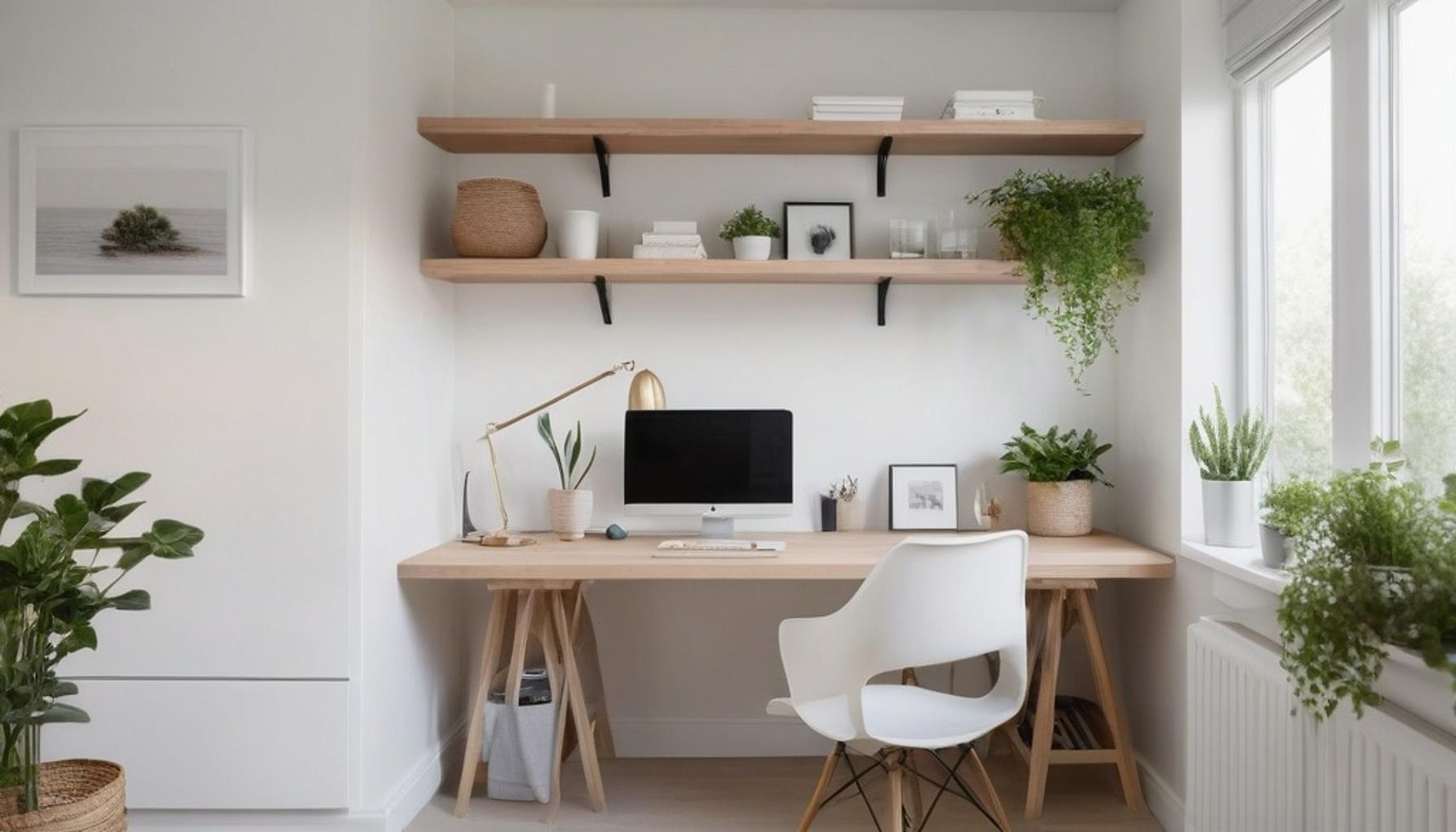
With over 27% of U.S. employees working remotely at least part-time as of 2023 Bureau of Labor Statistics data, home offices have become clutter hotspots. Paper stacks, cables, and duplicate chargers accumulate quickly.
Effective decluttering strategies for this space include digitizing documents through scanning apps and limiting desktop items to only what’s used daily. A clear desk, research from Princeton University’s Neuroscience Institute suggests, directly correlates with improved focus and reduced visual distraction.
Entryways: The Overlooked Bottleneck
Entryways absorb more daily clutter than almost any other zone, shoes, mail, keys, jackets. A simple space-saving idea gaining traction among professional organizers is the “landing station”: a small bench with hooks and a designated tray for mail sorting.
This micro-system, though small in footprint, often prevents clutter from migrating into living rooms and kitchens, reinforcing how targeted home organization methods can produce outsized results throughout the entire house.
SEE ALSO: The Importance of Automation in Creating Efficient Systems for a Minimalist Life
Bringing It All Together: Sustainable Order Over Perfection
Minimalist living isn’t about achieving a magazine-worthy empty room. It’s about building minimalist organization systems that hold up against real life, kids’ backpacks, holiday decorations, that mysterious drawer of cables nobody wants to sort through.
Across the kitchen, closet, home office, and entryway, one pattern emerges repeatedly: small, consistent habits outperform occasional dramatic purges. The “one entry, one exit” rule, the hanger trick, the landing station, none require a renovation budget. They require discipline and a willingness to question what actually earns space in a home.
Data backs this up. Households that adopt structured decluttering strategies report not just cleaner spaces but measurable reductions in daily stress, according to multiple studies referenced by organizing professionals nationwide. Clutter isn’t just visual noise; it’s cognitive load.
What’s worth remembering is that efficient home organization looks different in every household. A family of five in a suburban Ohio home faces different constraints than a single professional in a Brooklyn studio apartment. The systems should adapt to the humans living there, not the other way around.
- Start small: Pick one room, not the entire house, to avoid burnout.
- Track results: Note how much time is saved finding items after implementing new methods.
- Revisit often: Reassess systems every few months, since needs shift with seasons and life changes.
Ultimately, the most effective home organization methods aren’t rigid rules borrowed from a blog. They’re flexible frameworks tested against actual behavior. For readers curious to go further, exploring specific space-saving ideas tailored to apartment living, tiny homes, or multi-generational households might be the natural next step in this ongoing conversation about how Americans choose to live with less, and live better because of it.
Frequently Asked Questions
What are some effective strategies for starting a minimalist organization system in my home?
Begin by decluttering one room at a time, focusing on items you truly need or love. Implement a ‘one in, one out’ rule to maintain organization, and consider using clear storage bins to easily see and access your belongings.
How can I decide which items to keep when implementing minimalist organization systems?
Ask yourself if each item serves a purpose or brings you joy. If it doesn’t, it’s likely time to let it go. You can also evaluate the item based on its frequency of use—if you haven’t used it in over a year, consider donating or selling it.
What types of storage solutions work best for minimalist organization systems?
Opt for multifunctional furniture, such as ottomans with storage or beds with drawers, to maximize space. Open shelving can help keep items visible and encourage you to maintain a tidy environment while minimalist storage bins can keep smaller items organized without cluttering surfaces.
How can I maintain my minimalist organization system over time?
Set aside time each month to reassess your belongings and remove items that no longer fit your lifestyle. Developing daily habits, such as tidying up for a few minutes each day or regularly reviewing storage spaces, can also help keep your home organized.
Can minimalist organization systems work in small spaces?
Absolutely! In small spaces, every item should be functional and purposeful. Use vertical storage solutions like wall-mounted shelves, and consider furniture that doubles as storage to maximize your limited space while maintaining a minimalist aesthetic.
What role does digital organization play in a minimalist lifestyle?
Digital organization is vital for a minimalist lifestyle, as it reduces physical clutter and simplifies access to essential documents. Use cloud storage services for file management and consider digitizing important paper documents to maintain a streamlined home environment.

Linda Carter
Linda Carter is a writer specializing in minimalism and personal organization. With extensive experience helping readers create more functional and balanced routines, she shares practical advice on decluttering, organizing spaces, simplifying daily tasks, and making more intentional choices. Her goal is to offer clear guidance and accessible strategies that help people reduce excess, improve their surroundings, and enjoy a calmer, more organized lifestyle.