Personal Organization Strategies: Integrating Minimalist Philosophy into Efficient Work Systems
Why Less Is Becoming the New Productivity Standard
American professionals spend an average of 4.3 hours per week searching for misplaced files, emails, or documents, according to workplace efficiency studies. That number translates into roughly 28 lost workdays annually—a staggering figure for anyone chasing peak performance. This waste of time not only hampers productivity but also contributes to heightened frustration and burnout among employees, highlighting the urgent need for more effective organizational strategies.
This is where Personal Organization Strategies rooted in minimalist philosophy come into play. Instead of inundating workers with new apps, planners, or productivity hacks, the minimalist approach promotes a fundamental question: what can be removed? By stripping away unnecessary elements, professionals can refocus their energies on what truly matters.
The Shift From Clutter to Clarity
Across various sectors—from Silicon Valley startups to remote freelancers in Austin—professionals are rethinking how workspaces and schedules function. The goal isn’t merely achieving tidiness; it’s about building efficient work systems that minimize decision fatigue and mental clutter.
Consider what this shift typically involves:
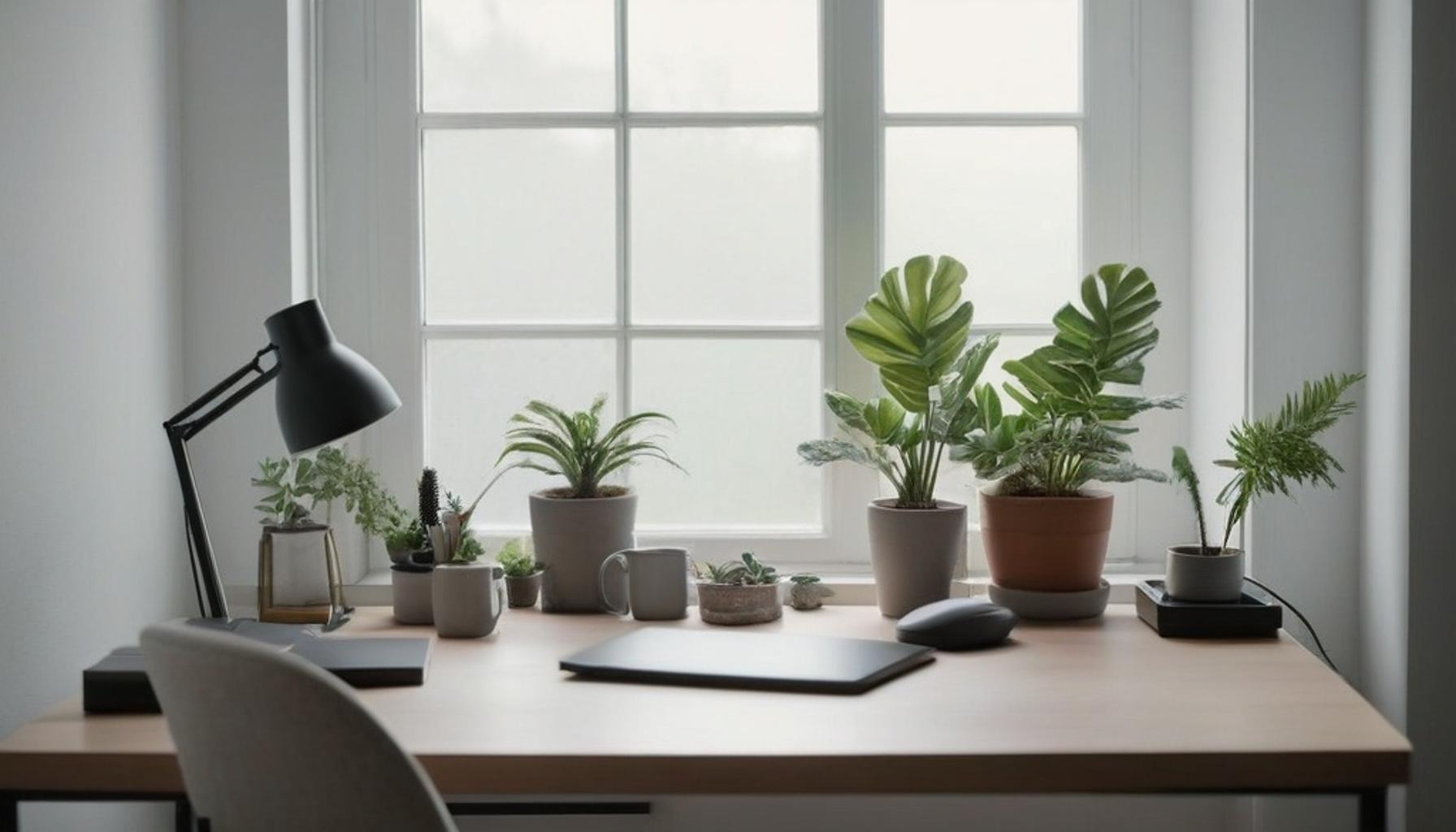
- Decluttering workspaces to eliminate visual distractions, such as removing excess papers and non-essential gadgets from desks.
- Adopting digital minimalism to combat app and notification overload, including uninstalling unused applications and managing notifications effectively to focus on meaningful tasks.
- Applying time management strategies that emphasize fewer, high-impact tasks, ensuring that priority projects receive the attention they deserve without the noise of less critical activities.
- Streamlining daily routines around essential decisions only, which could mean batching similar tasks together to minimize the cognitive load throughout the day.
What Readers Will Discover
This article delves into how minimalism for productivity transitions beyond mere aesthetic trends to yield measurable results. It’s not just about owning fewer things; it’s about creating systems that work smarter, not harder, contributing to an enhanced workflow and reduced stress levels.
Readers will uncover practical frameworks, real-world examples, and specific strategies designed to merge simplicity with structure in their daily work life. For instance, the success stories of companies that have implemented minimalists principles speak volumes—businesses report increased employee satisfaction, greater creativity, and heightened overall efficiency.
As the age of information overload continues to unfold, embracing a minimalist approach to productivity offers not just a path to efficiency, but an avenue for achieving a more balanced and fulfilling professional life. The time has come for professionals to prioritize clarity and focus over chaos and clutter.
YOU MAY ALSO LIKE: The Intersection of Minimalism and Efficiency: Creating Workflows that Reduce Stress and Increase Productivity
The Science Behind Minimalist Philosophy in Organization
Neuroscience offers a compelling explanation for why minimalist philosophy in organization works so effectively. Research from Princeton University’s Neuroscience Institute found that visual clutter competes for neural resources, reducing the brain’s ability to process information and focus on tasks. In simpler terms: a messy desk isn’t just an eyesore—it’s actively working against cognitive performance.
This finding aligns with what organizational psychologists have observed in workplaces from New York to San Francisco. When employees reduce environmental stimuli, they experience fewer interruptions in their thought processes, leading to deeper concentration and improved output quality.
Decluttering Workspaces: More Than a Trend
Decluttering workspaces has evolved from a spring-cleaning ritual into a legitimate business strategy. Companies like Basecamp and Buffer have publicly documented how minimal desk setups and streamlined digital tools have contributed to measurable productivity gains among remote teams.
The approach typically follows a few core principles that professionals can implement immediately:
- Keep only items used daily within arm’s reach, storing everything else in designated spaces outside the immediate work area.
- Limit desktop icons and open browser tabs to reduce visual noise during work sessions.
- Establish a “one-in, one-out” rule for physical and digital tools, ensuring space doesn’t gradually refill with unnecessary items.
- Schedule weekly five-minute resets to maintain organizational systems rather than allowing clutter to accumulate unchecked.
These aren’t complicated hacks requiring expensive software or consultants. They’re deliberate, small adjustments that compound over time into significant efficiency improvements.
Why Efficient Work Systems Depend on Subtraction, Not Addition
Traditional productivity culture often pushes professionals toward accumulation—more apps, more planners, more systems layered on top of existing ones. Efficient work systems, however, operate on an opposite principle: subtraction.
A 2023 survey by the American Productivity Institute revealed that 67% of knowledge workers use three or more task management tools simultaneously, yet report feeling less organized than those using a single, simplified system. This paradox underscores a critical insight: more tools often create more friction, not less.
Minimalist practitioners argue that true efficiency emerges when professionals audit their existing systems and eliminate redundancies. Rather than adding a fourth app to track projects, the minimalist approach asks whether three existing tools could be consolidated into one.
This subtraction-first mindset extends beyond software into daily habits, meeting structures, and even communication styles—setting the stage for a broader transformation in how American professionals approach their workdays.

| Category | Key Aspects |
|---|---|
| Decluttering | Creates clear spaces that enhance focus and reduce distractions. |
| Time Management | Utilizes techniques like the Pomodoro Technique to increase productivity. |
| Digi-minimalism | Reduces digital clutter by organizing files and limiting distractions. |
| Regular Reflection | Ensures continuous improvement of personal organization strategies. |
SEE ALSO: How Efficient Systems Theory Can Transform Your Daily Routine in a Minimalist Way
Building Personal Organization Strategies Around Time, Not Just Space
While decluttering physical and digital spaces addresses one dimension of minimalism, Personal Organization Strategies extend equally into how professionals structure their hours. Time, after all, is the one resource nobody can accumulate more of—making it the ultimate candidate for minimalist treatment.
Cal Newport, a computer science professor at Georgetown University, popularized the concept of “time blocking” as a minimalist alternative to reactive, notification-driven workdays. Instead of juggling dozens of micro-tasks scattered across a calendar, professionals dedicate large, uninterrupted blocks to single categories of work.
Time Management Strategies That Mirror Minimalist Values
Several time management strategies have emerged directly from minimalist thinking, gaining traction among American professionals seeking sustainable productivity rather than short-term hustle.
- Batching similar tasks—emails, calls, administrative work—into designated windows rather than responding to them throughout the day.
- Limiting daily priorities to three essential tasks, a method championed by productivity author Chris Bailey after testing dozens of systems over a year-long experiment.
- Applying the “two-minute rule,” where quick tasks are handled immediately to prevent small obligations from piling into overwhelming backlogs.
- Designating specific days for specific categories of work, a practice adopted by companies like Asana to reduce context-switching among engineering teams.
These approaches share a common thread: they reduce the number of decisions a person must make about how to spend their time, freeing mental bandwidth for the work that actually matters.
Minimalism for Productivity in Digital Environments
Minimalism for productivity isn’t confined to desks and calendars—it’s increasingly shaping how software companies design their products. Notion, Todoist, and Things 3 have all built features specifically around reducing visual complexity, reflecting growing consumer demand for tools that simplify rather than overwhelm.
A study published in the Journal of Consumer Research found that individuals presented with fewer choices in digital interfaces completed tasks 24% faster than those navigating cluttered menus. This data point reinforces a broader pattern: simplicity isn’t merely aesthetic preference, it’s measurable performance advantage.
For professionals across the United States, from tech hubs in Seattle to financial offices in Chicago, this suggests that auditing digital tools for unnecessary features may yield returns comparable to auditing a physical desk.
Ultimately, integrating minimalist principles into both spatial and temporal organization creates a compounding effect, where reduced clutter in one area reinforces clarity in another.
LEARN MORE: The Role of Digital Tools in Creating Efficient Minimalist Systems
Where Minimalist Philosophy in Organization Ultimately Leads
The evidence gathered across workplaces, research studies, and productivity circles points toward a consistent conclusion: Personal Organization Strategies rooted in minimalism aren’t a passing trend but a structural response to genuine cognitive overload. Fewer possessions, fewer digital distractions, and fewer competing priorities translate into measurable gains in focus and output.
What makes this approach compelling is its scalability. Whether someone works from a downtown Austin startup or a home office in rural Vermont, the same underlying principle applies: decluttering workspaces, both physical and digital, removes friction between intention and execution.
Practical Takeaways for Building Efficient Work Systems
Professionals don’t need to overhaul their entire routine overnight. Small, deliberate shifts tend to compound over time.
- Start by auditing one category—email inbox, desk surface, or calendar—before expanding minimalist habits elsewhere.
- Track productivity before and after simplification to see personal, measurable results rather than relying on anecdote.
- Revisit systems quarterly, since efficient work systems require periodic adjustment as responsibilities evolve.
What emerges from this broader conversation is a reminder that minimalism isn’t about deprivation. It’s about deliberate allocation of limited attention toward what genuinely produces value.
As remote work, digital tools, and always-on culture continue reshaping how Americans work, the professionals who thrive may increasingly be those willing to subtract before they add. The next step, perhaps, is examining which single habit—physical, digital, or temporal—offers the highest return if simplified first.
Frequently Asked Questions
How can I start integrating minimalist philosophy into my personal organization strategies?
To begin integrating minimalist philosophy, start by evaluating your current possessions and workflows. Identify items or tasks that no longer serve a purpose and eliminate them to create a more streamlined environment. Focus on only keeping what truly adds value, which will not only declutter your space but also enhance your efficiency.
What are some practical personal organization strategies for a minimalist workspace?
A minimalist workspace can be achieved by adopting simple strategies such as utilizing multi-functional furniture and digital tools to reduce physical clutter. Ensure that essential items are easily accessible and limit decorative items to a few meaningful pieces. Regularly reassessing your workspace will help you maintain a clean, organized area conducive to productivity.
Can personal organization strategies improve my work-life balance?
Yes, effective personal organization strategies can greatly enhance your work-life balance by allowing you to manage your time and tasks more efficiently. By integrating minimalist principles, you can prioritize important tasks, eliminate distractions, and create boundaries around your work. This intentional focus can lead to more time for personal activities and reduce stress levels.
What role does decluttering play in personal organization strategies?
Decluttering is a fundamental aspect of personal organization strategies, especially when combining it with minimalism. It helps to remove unnecessary distractions, allowing you to focus on what truly matters in your work and personal life. A decluttered environment not only promotes clearer thinking but also enhances your overall productivity.
How can technology support minimalist personal organization strategies?
Technology can support minimalist personal organization strategies by offering tools that streamline processes and reduce physical clutter. Apps for task management, digital note-taking, and calendar scheduling can help you organize your tasks and commitments efficiently. By utilizing cloud storage and digital planners, you can minimize paperwork and keep essential information at your fingertips.
What are the long-term benefits of using minimalist personal organization strategies?
Implementing minimalist personal organization strategies can lead to long-term benefits such as increased mental clarity, reduced stress, and improved focus on priorities. Over time, these strategies can cultivate habits that promote simplicity and intentionality in both your personal and professional life. Ultimately, this approach fosters a more balanced lifestyle and enhances overall well-being.

Linda Carter
Linda Carter is a writer specializing in minimalism and personal organization. With extensive experience helping readers create more functional and balanced routines, she shares practical advice on decluttering, organizing spaces, simplifying daily tasks, and making more intentional choices. Her goal is to offer clear guidance and accessible strategies that help people reduce excess, improve their surroundings, and enjoy a calmer, more organized lifestyle.